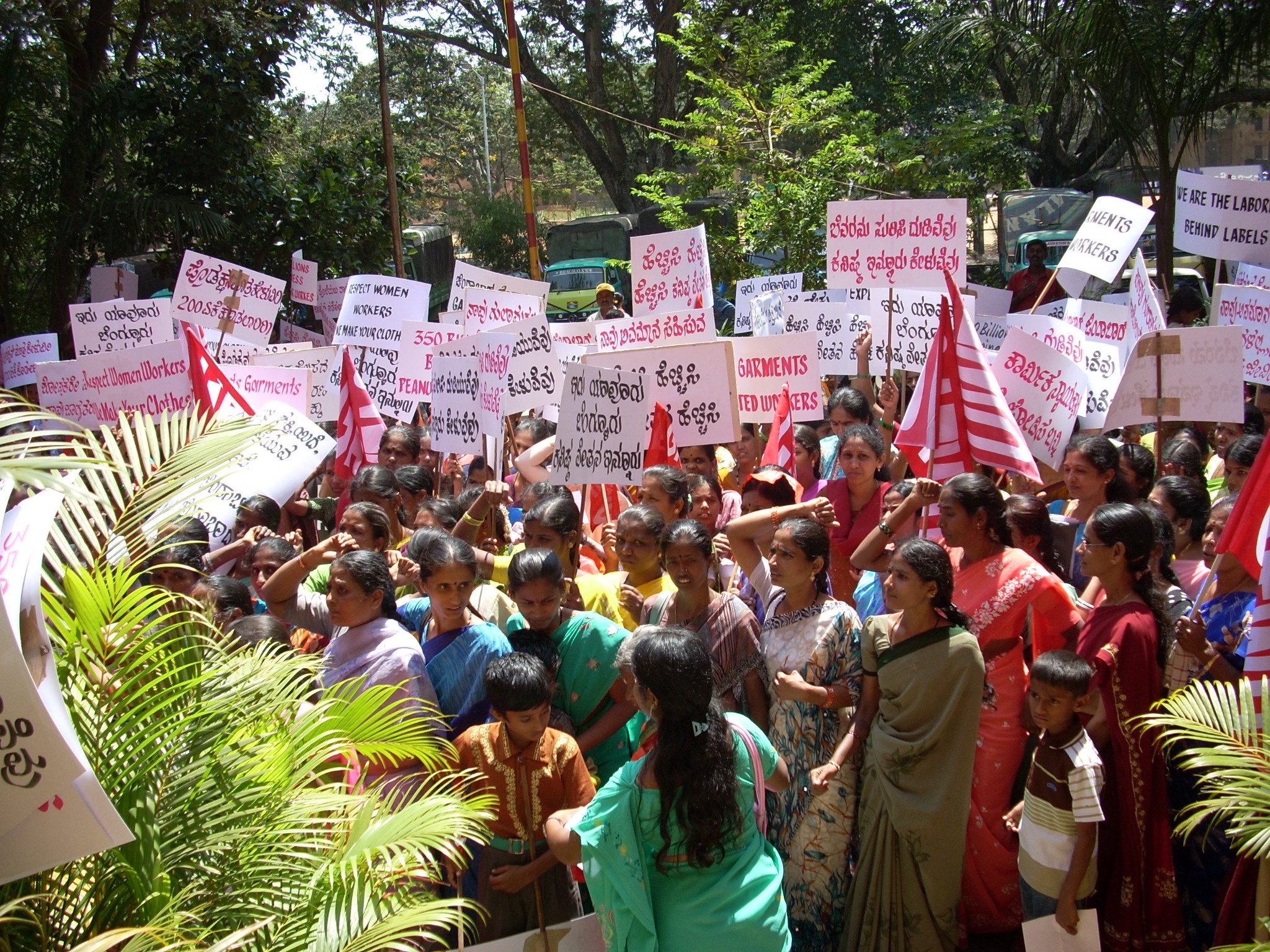
Bangalore (and the surrounding region) is one of the important centres for the manufacture of garments for the export sector in India. The region employs around 5 lakh (half a million) workers. More than eighty percent of the workers are women, and from socially and economically backward sections of society. An estimated around 3 percent of the total workforce in the sector are unionized.
The sector saw rapid expansion and growth in the first decade of this century, after the repeal of the quota regime under the Multi-Fibre Agreement in 2003. Today the largest companies in the export garment sector in Bangalore have turnovers of over Rs.1000 crores ($160 million) and employ up to thirty thousand workers. However, the absence of any significant trade union presence has resulted in no collective bargaining agreements, and low statutory Minimum Wage as determined by a tripartite wage fixing mechanism. This is the context in which the attempt to unionise workers under the Garment and Textile Workers Union (GATWU) was taken up.